
Key Takeaways
- Homeowners insurance in Naples, Florida is a major monthly cost, not an afterthought. Florida was the most expensive state in the country for home insurance in 2025, with an average around $8,292 a year reported by Insurify, and Naples premiums run above the state average.
- Your premium is driven by replacement cost, home age and roof condition, wind mitigation features, claims history, credit, and flood exposure. A waterfront home in Aqualane Shores or on Marco Island is priced differently from a condo inland in North Naples.
- Flood insurance is separate and often required by lenders in mapped flood zones. Florida has roughly 1.7 million National Flood Insurance Program policies in force, and Collier County flood policies have averaged about $1,239 a year in recent reporting.
- Condo buyers do not buy a full homeowners policy. The association carries the master policy, and you buy an HO-6 policy for your unit's interior and personal property, which changes your budget significantly.
- Get an insurance quote before you make an offer, or at least before your inspection deadlines pass, so the premium and its deductible are part of your budget instead of a surprise at closing.
Homeowners insurance in Naples, Florida costs more than in almost any other market in the country, because Florida is the most expensive state for home insurance and Naples sits on the hurricane-exposed Gulf coast. As a planning figure, the Florida-wide average ran about $8,292 a year in 2025, up 18% from 2024, according to Insurify's analysis, and Naples premiums sit well above that statewide number. Your exact quote depends on the home's replacement cost, age, roof, mitigation features, claims history, and flood zone, which is why the number belongs in your budget before you make an offer.
This guide covers what Naples buyers actually pay, why premiums are so high, how flood insurance changes the math from Aqualane Shores to Marco Island, how condos differ from single-family homes, and how to price coverage before you commit. It is written for local buyers and for relocating and international buyers learning Florida's insurance market for the first time.
Homeowners Insurance in Naples, Florida: The Short Answer
Homeowners insurance in Naples, Florida is expensive compared with most of the country, but it is not one number. Florida has led the country in home insurance costs for years, because insurers price the state on hurricane exposure, reinsurance, and past storm claims, and coastal counties like Collier and Lee carry the highest wind risk. In its 2026 report, Insurify put the 2025 Florida average at about $8,292 a year, an 18% increase over 2024, and projected a state average of roughly $8,458 by the end of 2026. Naples is a high-cost corner of an expensive state: Insurify's Naples figure, for a policy with $300,000 in dwelling coverage, was about $10,296 a year. When private carriers pull back, Citizens Property Insurance Corporation, Florida's state-regulated insurer of last resort, becomes the fallback for homeowners who cannot find private coverage, though eligibility has narrowed in recent years.
Those are averages, not quotes. Different insurers estimate the same home differently, and the dwelling coverage you choose, which should track replacement cost rather than sale price, is the largest driver of your premium. Expect insurance to be a real monthly line item in Naples, and check the closing costs guide for Naples buyers to see how the first year's premium fits into your cash at closing.
What Drives Your Naples Premium: The Big Variables
Once you understand the categories, a quote stops looking like a mystery. These are the factors that move your number the most in Collier and Lee Counties.
- Dwelling coverage. Your premium tracks the estimated cost to rebuild the home, not what you paid for it. Waterfront and larger homes in Aqualane Shores, Park Shore, and Old Naples carry higher replacement costs, so their premiums run higher before location is even factored in.
- Home age and roof. A newer roof, especially with a hip or gable design and a secondary water barrier, can lower your rate. Some carriers limit or decline coverage on aged roofs, so roof age is often the first question an insurer asks.
- Wind mitigation. Impact-resistant windows and doors, hurricane clips, and reinforced openings earn credits that can cut a coastal Florida premium noticeably. A licensed wind-mitigation inspection creates the report insurers discount against.
- Claims history and credit. Claims on your record, and your credit where allowed, factor into underwriting. International buyers with no U.S. insurance history may need extra documentation, and a local agent used to foreign buyers can help.
- Flood exposure. Wind coverage handles hurricanes, but rising water is separate. Flood rates follow FEMA's flood maps and the property's elevation, which is why Naples canal homes often carry a second policy on top of the homeowners policy.
- Occupancy and use. Primary homes, second homes, and rentals are priced differently. A Naples or Marco Island second home typically costs more because it sits vacant part of the year, a point the second home cost guide for Naples covers in detail.
Flood Insurance: The Naples Question Buyers Forget
Standard homeowners policies in Florida do not cover flooding. Flood insurance is a separate policy, through the National Flood Insurance Program (NFIP) or a private insurer, and lenders generally require it in mapped flood zones. Flooding in Naples is not only storm surge. Heavy rain, high groundwater, and tidal flooding through low-lying canal neighborhoods matter too, which is why flood maps matter blocks from the beach.
The scale of flood exposure here is real. Florida has roughly 1.7 million NFIP policies in force, the most of any state, and recent OpenFEMA reporting shows about 96,000 policies written or renewed in Collier County in a year, with an average premium near $1,239. The NFIP prices each property on its own flood risk, so your quote depends on the zone (coastal zones like VE and AE cost the most), the elevation, and the first-floor height. Your lender checks the FEMA Flood Map Service Center against the property's zone at closing, and so should you.
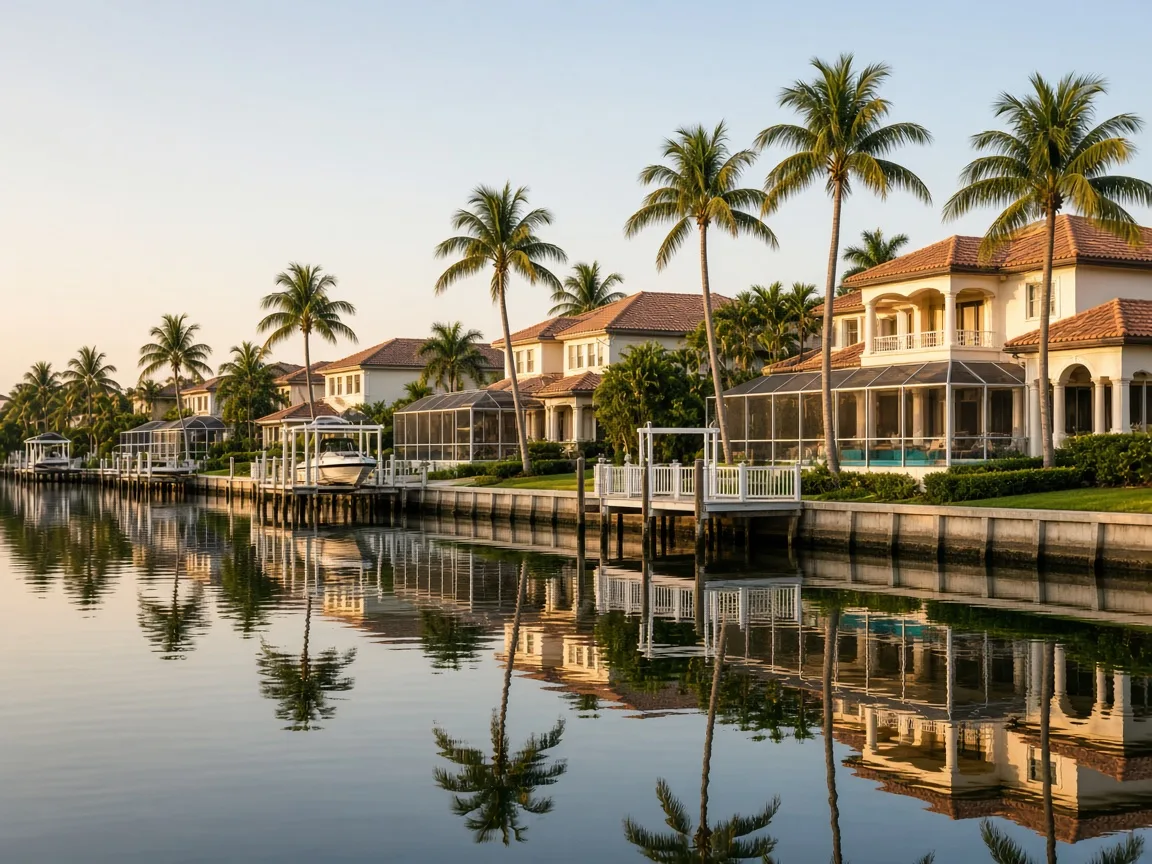
For buyers comparing neighborhoods, flood exposure is part of the price story. Waterfront communities like Aqualane Shores, Royal Harbor, and the canals of Marco Island carry flood policies that inland golf communities in Estero or Bonita Springs do not. That gap shows up every year, not just at closing, which is why the Marco Island area guide and the Naples neighborhood guide treat insurance as a real line item when comparing communities.
Condos, Single-Family Homes, and Waterfront: How Coverage Differs
The type of property changes the whole insurance picture. A single-family home requires a full homeowners policy. A condo needs two layers instead: the association carries a master policy covering the building and common areas, and you buy an HO-6 policy covering your unit's interior, improvements, and personal property, plus loss assessment coverage for special assessments. Condo dues usually include the master policy, so your own HO-6 premium is typically far cheaper than a single-family homeowners policy. The condo buying guide for Naples explains how association finances, reserves, and master policies factor into your decision.
Waterfront single-family homes combine the most expensive elements: high replacement cost, wind exposure, and flood exposure. A canal home in Royal Harbor or a Gulf-front home on Marco Island can carry a combined insurance bill several times that of a comparable inland home. The waterfront homes guide for Naples buyers walks through what dock ownership, seawalls, and flood elevation add to both price and upkeep.
How Insurance Changes Your Buying Budget in Naples
Insurance should change how you compare two homes at the same price. A newer, wind-mitigated home inland can cost far less to carry than an older home near the water, and a condo with a healthy master policy often beats a single-family home over a flood zone. When a lender pre-approves you, they estimate escrow for insurance and taxes, so an understated insurance figure can make a house look affordable when it is not.
Out-of-state and international buyers underestimate this line item most, because the national averages they see online sit far below Florida's. The home buying guide for Southwest Florida includes insurance at every step of the budget so the monthly picture stays honest.
What to Do Before You Make an Offer
You can price the insurance story before you ever write an offer. It takes an afternoon and it prevents the single biggest budget surprise in the Naples market.
- Get a quote on the actual home. Share the address, the coverage and deductible you want, and any wind-mitigation report the seller has. Ask for the annual premium and what the insurer needs before binding.
- Check the flood zone on FEMA's flood map. Ask whether the home sits in a Special Flood Hazard Area and what the flood quote would be. If a lender is involved, this is not optional, so price it early.
- Ask about deductibles. Florida policies carry a separate hurricane deductible, usually a percentage of dwelling coverage, plus the standard wind and hail deductible. Understand both, and confirm what a total loss would actually pay.
- For condos, read the association budget. The master policy, the association's deductible, and its reserves all affect what you pay and what is covered. Your contract should include the right to review the condo documents before you commit.
- Use your inspection window wisely. A roof nearing the end of its life or missing mitigation features can be negotiated, repaired, or priced in, but only if you know about it while the deal is still open.
How a Local, Bilingual Advisor Helps You Budget
Insurance is where relocating and international buyers feel least prepared. An advisor who has watched the market through storm seasons and rate increases can point you to insurers that work with foreign buyers, flag homes whose wind-mitigation reports will earn discounts, and put the premium into the budget from the first tour instead of the week before closing.
Catalina Quintero is a REALTOR with The Miranda Group at Premiere Plus Realty, Co., serving buyers and sellers in Naples, Bonita Springs, Estero, Fort Myers, and Marco Island. She is bilingual in English and Spanish, holds the CIPS designation and RENE certification, and brings a legal background to the contract, inspection, and closing details that shape what a Naples home really costs. Her own move from Colombia gives her a firsthand understanding of buying in a market you are still learning. Reach her through the contact page to schedule a consultation.
Whether you are financing a condo near Park Shore or buying a waterfront home on Marco Island, the approach is the same: price the insurance early, read the flood map, understand the deductibles, and let the real monthly number shape your decision. That is how buyers move through Naples with confidence instead of surprises.
Thinking About a Move to Naples? Start With a Conversation.
Contact Catalina Quintero at (239) 206-6909 or visit catalina-quintero.huzi.site/contact/ to schedule a consultation.