
Key Takeaways
- A common planning estimate for financed buyers in Naples is roughly 2% to 4% of the purchase price in closing costs, while cash buyers may pay closer to 1% to 2% because they skip lender fees and Florida's two mortgage taxes. These are illustrative budgets, not quotes.
- Your buyer closing costs include lender fees, a home inspection, title search and title insurance, mortgage taxes on your loan, county recording fees, and prepaid items such as property tax prorations and an initial homeowners insurance premium.
- In Collier County, the buyer customarily pays for the owner's title insurance policy, a Florida-regulated cost. The contract controls the allocation, and it is negotiable.
- Real estate compensation is negotiable. Sellers customarily pay the commission in Florida, but buyers should review their written buyer agreement and confirm whether any amount will be their responsibility, along with the documentary stamp tax on the deed.
- Get a written estimate before you make an offer, review the fees line by line with your lender and title company, and ask what a seller may contribute so there are no surprises at the table.
In Naples, Florida, a common planning estimate for buyer closing costs is about 2% to 4% of the purchase price when financing, and closer to 1% to 2% when paying cash. Actual costs vary by loan, property, and location, and general guidance from the Consumer Financial Protection Bureau suggests planning for 2% to 5%. On a $750,000 home, that usually works out to roughly $15,000 to $30,000 for a financed buyer. The exact number depends on your loan amount, your title insurance, and the prepaid items you bring to the table on closing day, such as property tax prorations and an initial insurance premium.
These illustrative ranges do not include discount points or any buyer-paid brokerage compensation, and escrow and prepaid amounts depend on your closing date and loan.
This guide walks through what is actually inside a buyer's closing costs in Naples and Collier County, what the seller customarily pays instead, and how to estimate your number before you ever make an offer. By the end you should have a clear budget in mind, not a vague percentage.
Closing Costs in Naples, Florida: What Buyers Actually Pay
The short answer is that closing costs in Naples, Florida are a mix of lender fees, title charges, government taxes, and prepaid items, and they are spread across your loan, your title insurance, and the taxes and insurance you prepay for the year. There is no single flat fee. Instead, each part is calculated from your purchase price, your loan amount, and the timing of your closing date.
As an illustrative planning rule, many financed buyers in this market set aside 2% to 4% of the purchase price, though actual costs vary by loan, property, and location. A buyer paying all cash skips the lender-related pieces and the two mortgage taxes, which is why their closing costs usually come in lower, closer to 1% to 2%. Either way, the biggest variable is usually title insurance and how much you prepay in taxes and homeowners insurance, not the purchase price alone.
Why Naples Buyers Pay a Little More: Collier County Title Insurance
One quirk of buying in Naples is worth knowing up front. In most of Florida the seller pays for the owner's title insurance policy, but Collier County is one of only a few Florida counties where the buyer customarily pays for it. This is a Florida regulated rate, so the cost is predictable, and it is a real line item in a Naples buyer's closing costs. The contract controls who pays, and the allocation is negotiable. The state regulates the title insurance premium itself, while other title and settlement service charges are not all fixed by the state.
Owner's title insurance protects you for as long as you own the property against title defects, unpaid liens, or recording problems that surface after closing. It is a one time fee paid at closing, and for most buyers it is well worth it, because it protects the largest purchase most people will ever make. Your lender also requires a lender's title policy, which protects the lender's interest, and that one is a standard part of any financed closing in Florida.
What Is Inside a Buyer's Closing Costs
Once you see a closing statement for a Naples purchase, the same handful of categories show up again and again. Here is what each one covers and roughly how it is calculated.
- Lender fees. If you finance, your lender charges an origination fee, underwriting, processing, an appraisal, a credit report, and sometimes a survey or points. These are quoted on your loan estimate and vary by lender, so they are worth comparing before you commit.
- Title search and title insurance. A title company searches public records for liens or defects, then issues lender's and owner's title policies. In Collier County the buyer customarily pays for the owner's policy at a Florida regulated rate.
- Florida mortgage taxes. Financed buyers pay Florida's documentary stamp tax on the note at $0.35 per $100 or fraction thereof of the loan, plus a one time nonrecurring intangible tax of 0.2%, or $2 per $1,000, of the loan. The Florida Department of Revenue publishes the current rates.
- Recording fees. The Collier County Clerk charges $10 for the first page and $8.50 for each additional page to record the deed and mortgage. The Collier Clerk publishes the full fee schedule.
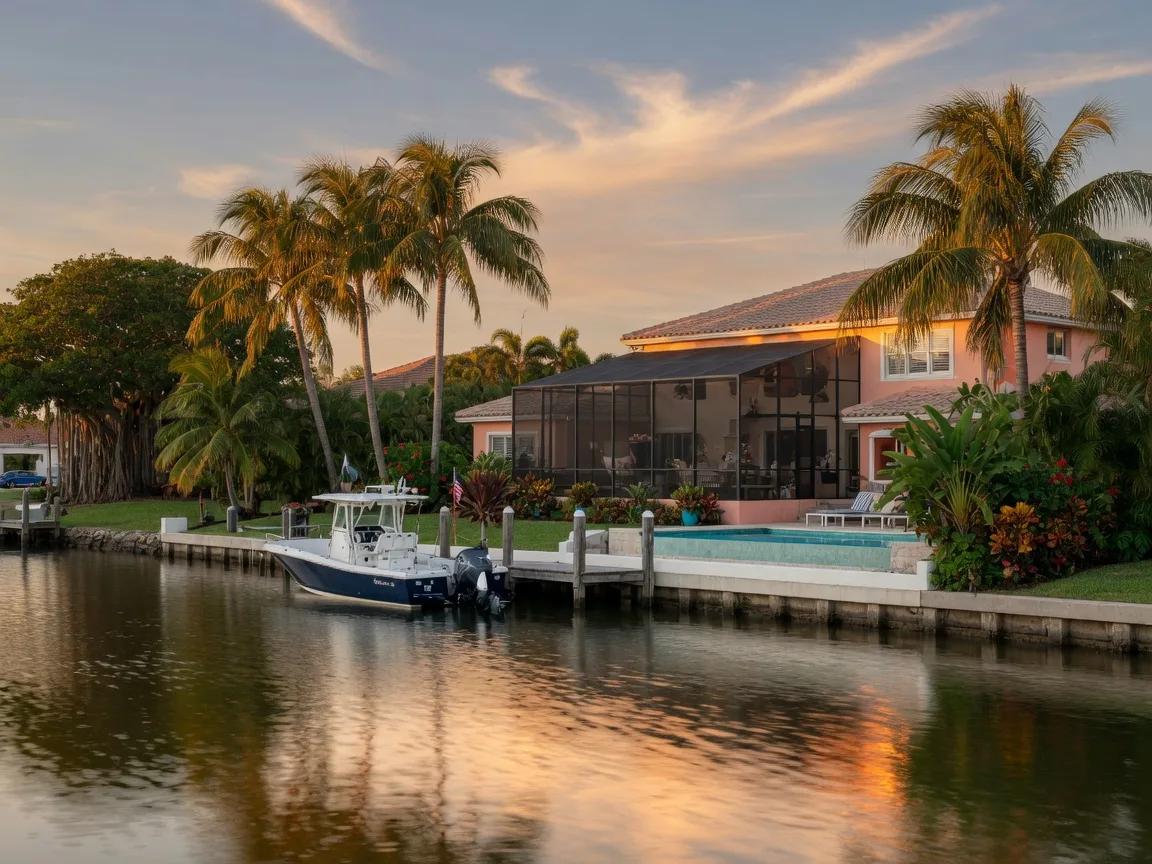
- Home inspection and prepaids. Most buyers pay for a home inspection. At closing, buyers may pay the initial homeowners insurance premium, prepaid mortgage interest, and, if required, fund an escrow account for future taxes and insurance. Property taxes are prorated between buyer and seller according to the contract and closing date. Cash buyers generally arrange to pay ongoing taxes and insurance directly. On a waterfront home these prepaids can be a meaningful chunk of your total.
What the Seller Pays in Florida
In Florida the seller customarily pays the real estate commission and the documentary stamp tax on the deed, which runs $0.70 per $100 or fraction thereof of the taxable consideration in Collier County; rates differ in Miami-Dade County, so figures vary across Florida. That means two of the larger closing costs in a Naples transaction generally land on the seller, not on you. It is one reason a buyer's closing costs here can look modest compared with the total cost of the deal.
That said, how fees are split is ultimately negotiated and written into the contract. In a competitive market a seller might contribute a credit toward your closing costs, and in some cases buyers ask for seller paid closing costs as part of the offer. It is always worth asking, because a seller credit can meaningfully reduce how much you need to bring to the table on closing day.

How to Estimate Your Closing Costs Before You Make an Offer
You do not need to wait until closing to know your number. For most purchase mortgages, the lender must give you a Loan Estimate within three business days of receiving your application, itemizing your estimated closing costs. You must also receive the Closing Disclosure at least three business days before closing. Compare both with what your title company quotes, then read them line by line before you commit. The estimates are meant to be close, and discrepancies are worth questioning rather than ignoring.
A simple way to sanity check your budget is to multiply the purchase price by your expected percentage. On a $500,000 condo in North Naples, a financed buyer should plan for roughly $10,000 to $20,000 in closing costs, plus their down payment. On a $1.5 million waterfront home in Port Royal or along Vanderbilt Beach Road, the same percentage works out to about $30,000 to $60,000. Because the percentage holds across price points, the neighborhoods you are looking at matter less than your loan structure when it comes to the total.
Where you buy inside Naples shifts the lifestyle more than the closing cost math. A condo in a managed community near the beach brings its own HOA and maintenance picture, which the condo buying guide for Naples covers in detail. For a fuller look at the neighborhoods and price bands across the city, the Naples neighborhood guide is the place to start.
Cash Versus Financed Buyers: How the Math Changes
Cash buyers in Naples avoid two of the biggest buyer expenses: lender fees and Florida's two mortgage taxes. They still pay title insurance, recording fees, an inspection, and prepaid property taxes and insurance, but their closing costs often land in the 1% to 2% range as an illustration instead of 2% to 4%. That saving is one reason all cash offers are attractive in a competitive market, both for the buyer and for the seller who values a fast, certain close.
For financed buyers, especially those relocating from another state or from abroad, it is worth lining up a lender early who understands your situation. Out of state and international buyers often face extra questions around credit history, financing, and an ITIN, and the guide for relocating physicians and the home buying guide walk through the broader process, including how to budget beyond the down payment.
How a Local, Bilingual Advisor Helps You Budget and Close
Closing costs are where first time buyers, relocating families, and international buyers most often get caught off guard, because the percentage is easy to underestimate and the line items are easy to misunderstand. An advisor who has guided Naples buyers through the closing process can pull together lender estimates, title quotes, and community rules, then explain each fee in plain language, in English or Spanish.
Catalina Quintero, a REALTOR with The Miranda Group at Premiere Plus Realty, Co., serves buyers across Naples, Bonita Springs, Estero, Fort Myers, and Marco Island. She is bilingual in English and Spanish, holds the CIPS designation and the RENE certification, and brings a legal background to reviewing contracts and closing statements so you understand every line before you sign. Her own move from Colombia to build a life in the United States gives her a firsthand feel for what it is like to buy in a place you are still learning. You can reach her through the contact page to schedule a consultation.
Whether you are financing a condo in Estero or paying cash for a waterfront home in Marco Island, the path is the same: get a written estimate, understand what the seller covers, and walk into closing with your eyes open. That is the difference between a stressful signing and a confident one.
Thinking About a Move to Naples? Start With a Conversation.
Contact Catalina Quintero at (239) 206-6909 or visit catalina-quintero.huzi.site/contact/ to schedule a consultation.