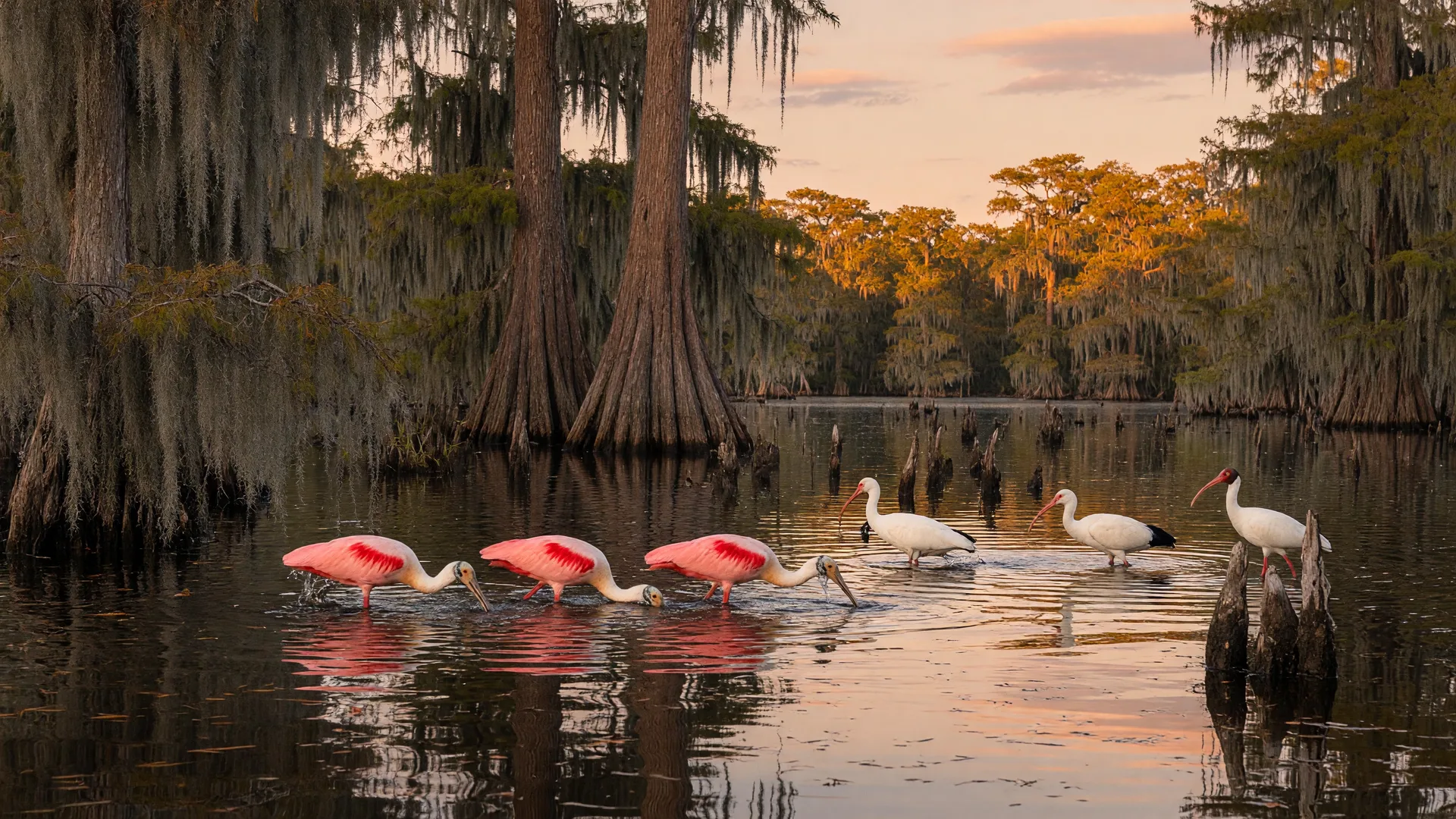

October is one of the most interesting weeks of the year for nature in Southwest Florida. Right now fall bird migration is at its peak, southeastern sunflowers are blooming by the thousands along the Corkscrew Swamp Sanctuary boardwalk, and the first fall signs are showing up across Naples, Bonita Springs, Estero, Fort Myers, and Marco Island. This guide covers what is happening in nature this week and where to see it best, with locations, hours, and links to official sources. Every event and place below is one I can verify from current reporting or the managing agency's own pages.
Key Takeaways
- Fall bird migration peaks in mid-October, with songbirds and shorebirds moving through Southwest Florida on the Atlantic Flyway.
- Southeastern sunflowers are at their peak bloom at Corkscrew Swamp Sanctuary, typically the first two weeks of October.
- Sea turtle nesting season runs through October 31, so a few late nests may still be hatching on area beaches.
- Burrowing owls are active at their burrows in Cape Coral through the fall, best watched from a distance.
- Manatees are starting to move toward warm-water refuges, with Manatee Park in Fort Myers the best local place to check through the season.
Fall bird migration is at its peak right now
Mid-October is the heart of fall migration in Southwest Florida. BirdCast radar shows millions of migratory birds passing over the region on many October nights, and the birds that stop here are spread across the same forests, wetlands, and flats where residents and visitors spend their weekends. Early morning is the best time to look, when the night's arrivals settle in to feed.
Audubon's Corkscrew Swamp Sanctuary, Naples
375 Sanctuary Road West, Naples · about 30 minutes northeast of Naples
Corkscrew's 2.25-mile boardwalk winds through one of the oldest remaining virgin bald-cypress forests in North America, and fall migration brings warblers and songbirds through it for months. October is also when painted buntings arrive to spend the winter, and roseate spoonbills, ibis, and herons feed in the wet prairies and sloughs along the way. In October the sanctuary is open daily from 8 AM to 1 PM, with last admission two hours before close. Admission is $17 for adults, $6 for children ages 6-14, and free for children under 6; buying tickets online is recommended. The Corkscrew Swamp Sanctuary site has hours, fees, and current bird sightings.
Get directionsBunche Beach, Fort Myers
18201 John Morris Road, Fort Myers · San Carlos Bay
Bunche Beach Preserve is a natural, 718-acre stretch of beach, mangrove forest, and salt flats along San Carlos Bay. In the fall, shorebirds move through in good numbers: willets, plovers, and sandpipers work the flats at low tide, and wading birds gather near the mangroves. It is open from dawn to dusk with about $2 per hour parking, and late afternoon brings some of the best sunsets in the area. The Lee County Bunche Beach page has the details.
Get directionsJ.N. "Ding" Darling National Wildlife Refuge, Sanibel
1 Wildlife Drive, Sanibel
Ding Darling's five-mile Wildlife Drive is a slow, self-guided loop through mangrove forests where more than 240 species have been recorded. Fall brings migrating shorebirds and songbirds, along with the refuge's year-round residents like roseate spoonbills and reddish egrets. The drive is open daily from 7 AM to 5:30 PM and closed every Friday; entrance is $10 per vehicle. The U.S. Fish & Wildlife visit page has current hours and fees.
Get directionsSoutheastern sunflowers are in full bloom at Corkscrew
October's signature bloom in Southwest Florida is the southeastern sunflower. Along the Corkscrew boardwalk, these bright yellow, daisy-like flowers bloom by the thousands, with the peak typically falling in the first two weeks of October, which means this is the week. The flowers grow in the open wet prairies beside the boardwalk, so the walk becomes a rolling field of yellow. Stay on the boardwalk and leave the plants in place; everything in the sanctuary is protected.
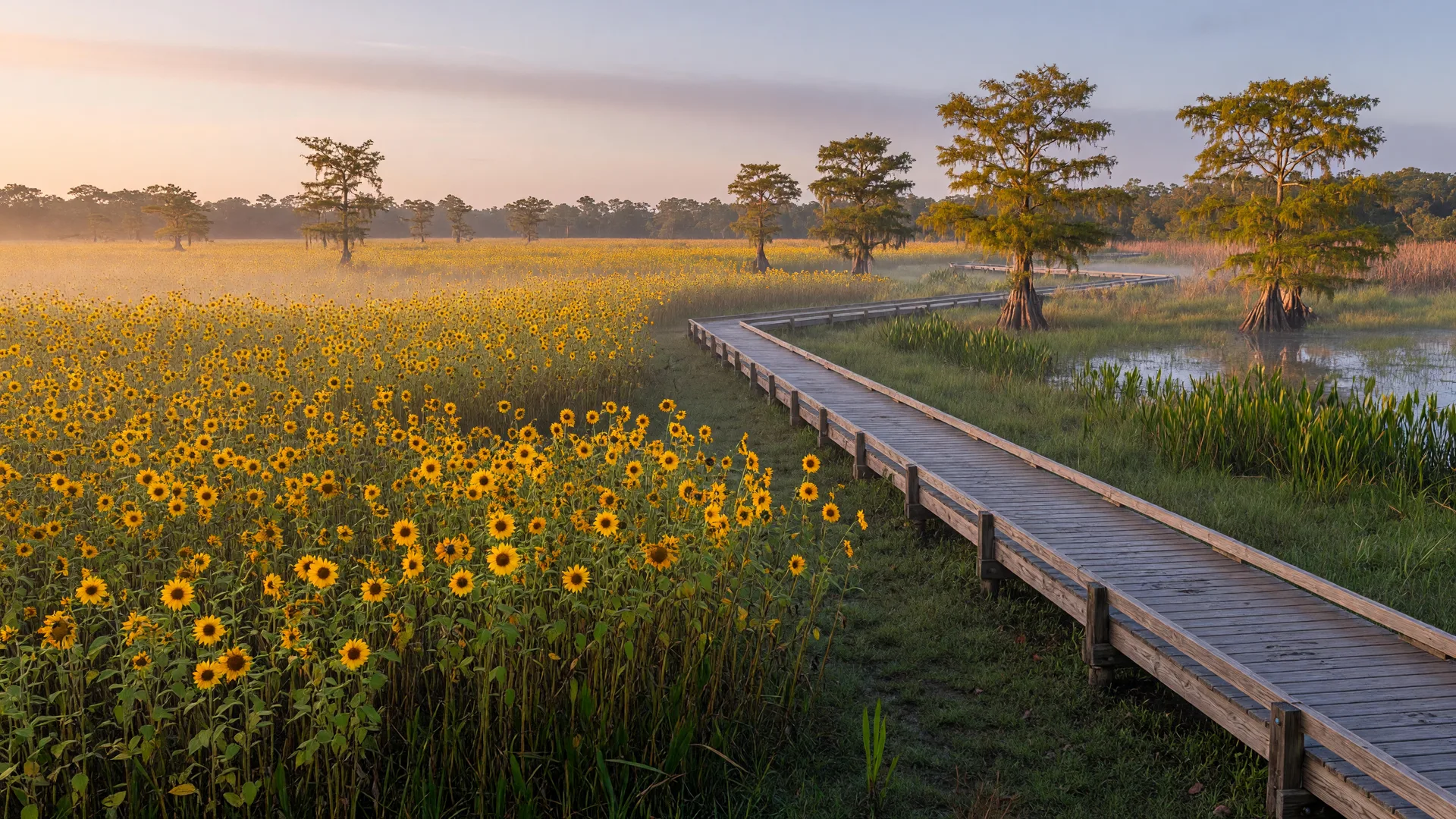
The same walk also turns up fall wildflowers in the wetlands, and Corkscrew's birds are easier to spot as the weather cools. If you only pick one nature stop this week, this is the one.
Fall wildflowers are out on the trails
Goldenrod is the traditional sign of fall across Florida, and October is when it shows up in force. Along the coast, seaside goldenrod blooms in yellow masses and is one of the best nectar sources for migrating monarchs. Inland, October brings the lavender spikes of Chapman's blazing star to the region's pine flatwoods and wet prairies.
CREW Cypress Dome Trails, east of Estero
3980 Corkscrew Road, Immokalee · off I-75 exit 123, east of Estero
The CREW trails cover about six miles of flat, well-marked loops through pine flatwoods, oak hammocks, and two cypress domes. October is a good month for wildflowers here, and early morning is the best time for birds and the quietest trails. The trails are free, with donations welcome, and stay open from about sunrise to sunset. The CREW Land & Water Trust trails page has the details.
Get directionsMonarch butterflies are moving through
October is monarch season in Florida. Some Gulf Coast migrants pass through on their way south, and the region also hosts its own resident monarch population, so the butterflies are a regular sight through the fall. They gather where the flowers are, which means the same spots as the wildflowers: Corkscrew's sunflowers, the goldenrod along coastal dunes, and the butterfly-friendly gardens at places like the CREW trails.
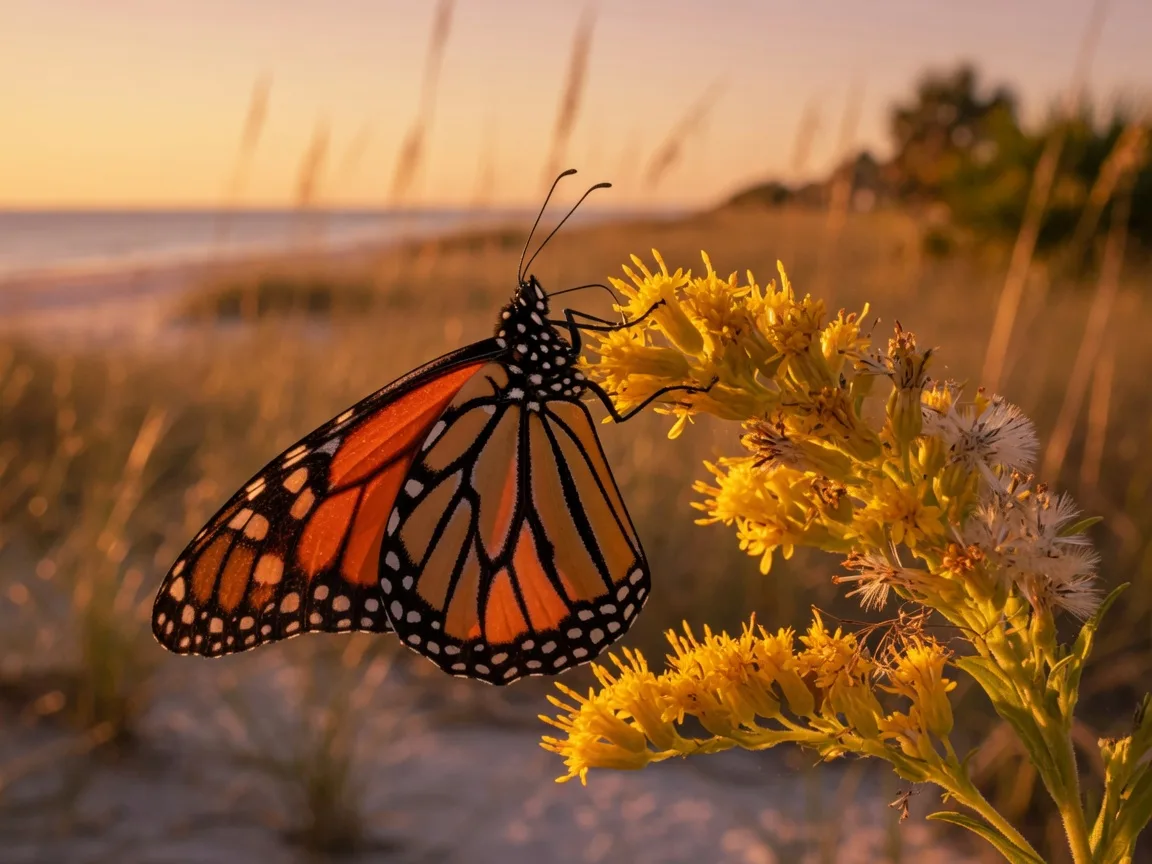
The most reliable way to see them is to look for flowering goldenrod on a warm, still afternoon, along a coastal trail like Bunche Beach or anywhere the native fall blooms are left standing.
Sea turtle season is winding down
Florida's sea turtle nesting season runs from May through October 31, and by mid-October nearly all new nesting is done. But eggs incubate for roughly 50 to 60 days, so a few late-season nests may still be incubating or hatching on area beaches through the end of the month. That means it is still worth giving nests and hatchlings plenty of room.
The beaches to walk this week include Delnor-Wiggins Pass State Park in North Naples, Barefoot Beach Preserve in Bonita Springs, Tigertail Beach on Marco Island, and Lovers Key State Park on Fort Myers Beach. The same rules apply at all of them: if you see a nest or a hatchling, keep your distance, leave the hatchlings to find the water on their own, and never use flash photography or lights on the beach at night. Filling in holes and flattening sandcastles before you leave helps hatchlings cross the sand safely. The City of Naples sea turtle page explains how to share the beach with nesting turtles.
For beach hours and parking details, our water activities guide for this week lists each beach with current water-quality and red tide status.
Burrowing owls are back out at their burrows in Cape Coral
Cape Coral holds the largest population of Florida burrowing owls in the state, and fall is a good time to see them. From roughly September through January, pairs that survived the summer return to their burrows and juveniles from the spring are out and about, so the owls are noticeably active. They are also unusual among owls because they are active during the day, which makes them easier to spot.
Where to look in Cape Coral
Burrows are scattered across the city in vacant lots, parks, medians, and open lawns, usually marked by a wooden perch and, during nesting season, by white stakes around a protective buffer. Rotary Park Environmental Center on Rose Garden Road has burrows visible from its trails, and burrows also show up around parks throughout the city. Active burrows have a 33-foot protective buffer, so the best way to watch is from the sidewalk with binoculars, staying quiet and not lingering.
Get directions to Rotary ParkBurrowing owls are protected, so please never feed them, enter a marked burrow area, or get close enough to disturb them. The Cape Coral Friends of Wildlife viewing etiquette has the full list of do's and don'ts.
Manatees are starting to move toward warm water
October is a transition month for manatees in Southwest Florida. Through the warm months they roam the bays, rivers, and estuaries, and as water temperatures drop they begin drifting toward warm-water refuges. The big gatherings usually come later, from roughly December through February, but manatee season is officially recognized from November 15 through March 31, so this is the time of year they start appearing in predictable places.
Manatee Park, Fort Myers
10901 State Road 80 (Palm Beach Boulevard), Fort Myers
Manatee Park sits on the warm-water discharge canal of a nearby power plant and is the best local place to see manatees in Southwest Florida. The park is open daily from 8 AM to 7 PM with free admission and paid parking at $2 per hour or $5 per day. Viewing is most reliable in late December through February, but the boardwalk and viewing deck are worth a stop now and through the fall to watch for early arrivals. The Lee County Manatee Park page has hours and directions.
Get directionsIf you are out on the water, manatees can also show up in the Caloosahatchee River, along the Naples coast, and near Lovers Key State Park as the season progresses. Boaters are reminded to go slow in manatee zones and give them space.
How to check conditions before you go
Nature changes week to week, and the agencies update their pages continuously. These are the official pages worth a check before you head out:
- FWC red tide status: current Karenia brevis concentrations, updated weekly. FWC's October 9, 2026 update reported background levels with no fish kills and no respiratory irritation along the Gulf coast.
- DOH Healthy Beaches, Collier County: weekly bacteria sampling for Naples, Bonita Springs, and Marco Island beaches.
- DOH Healthy Beaches, Lee County: weekly bacteria sampling for Fort Myers Beach and Sanibel-area beaches.
- Corkscrew Swamp Sanctuary: current hours, tickets, and the sanctuary's latest bird and bloom sightings.
- Ding Darling visit page: Wildlife Drive hours and fees, including the Friday closure.
- NWS beach forecast for Florida: daily surf zone conditions and rip current risk for Collier and Lee beaches.
Frequently Asked Questions
Where is the best place to see fall bird migration in Southwest Florida this week?
Corkscrew Swamp Sanctuary in Naples is the best single stop, with warblers and songbirds moving through the cypress forest and painted buntings arriving for winter. Bunche Beach in Fort Myers is excellent for shorebirds at low tide, and J.N. "Ding" Darling on Sanibel has a slow, self-guided drive through mangrove habitat. Early morning is the best time at all of them.
Is Corkscrew Swamp Sanctuary open in October, and what does it cost?
Yes. In October it is open daily from 8 AM to 1 PM, with last admission two hours before close. Admission is $17 for adults, $6 for children ages 6 to 14, and free for children under 6. Buying tickets online is recommended.
Can I still see sea turtle hatchlings in mid-October?
Sea turtle nesting season runs through October 31, and because eggs incubate for about 50 to 60 days, a few late-season nests may still be hatching on area beaches. Give nests and hatchlings plenty of room, never use lights or flash on the beach at night, and leave hatchlings to find the water on their own.
Where can I see burrowing owls in Cape Coral?
Burrows are scattered across the city in vacant lots, parks, medians, and open lawns, and Rotary Park Environmental Center has burrows visible from its trails. Keep at least 33 feet from active burrows, watch quietly from the sidewalk, and never feed the owls.
When is the best time to see manatees in Fort Myers?
Viewing is most reliable from late December through February at Manatee Park, when the water cools and manatees gather in the warm-water discharge canal. October is when they start moving toward warm-water refuges, so it is a good time to begin checking the park's boardwalk.
What is blooming in Southwest Florida in October?
Southeastern sunflowers are at their peak along the Corkscrew boardwalk in the first two weeks of October. Goldenrod, including seaside goldenrod along the coast, blooms in yellow masses, and Chapman's blazing star shows its lavender spikes on the CREW trails east of Estero.
A note on fair housing: every home and community in Southwest Florida is open to all qualified buyers and renters, without regard to race, color, religion, sex, disability, familial status, or national origin. The beaches, trails, and parks here are shared public places, welcome to everyone, and the viewing rules are the same for all visitors.
A note from the author: I'm Catalina Quintero, a bilingual REALTOR with The Miranda Group at Premiere Plus Realty, Co., serving Naples, Bonita Springs, Estero, Fort Myers, and Marco Island. Every week I put this nature guide together from current, published reporting and the official pages of the agencies that manage these places, so things can shift and it always pays to confirm before you head out. If you're exploring Southwest Florida with a move in mind, email or text me any time.
Thinking About a Move to Naples? Start With a Conversation.
Contact Catalina Quintero at (239) 206-6909 or use the contact page to schedule a consultation.